


What follows are complementary materials to the most recently published episode of TULUBAIKAPORIA:

Previous Substack instalments available here. You can also purchase the whole book — it’s already out, and readers are writing reviews!
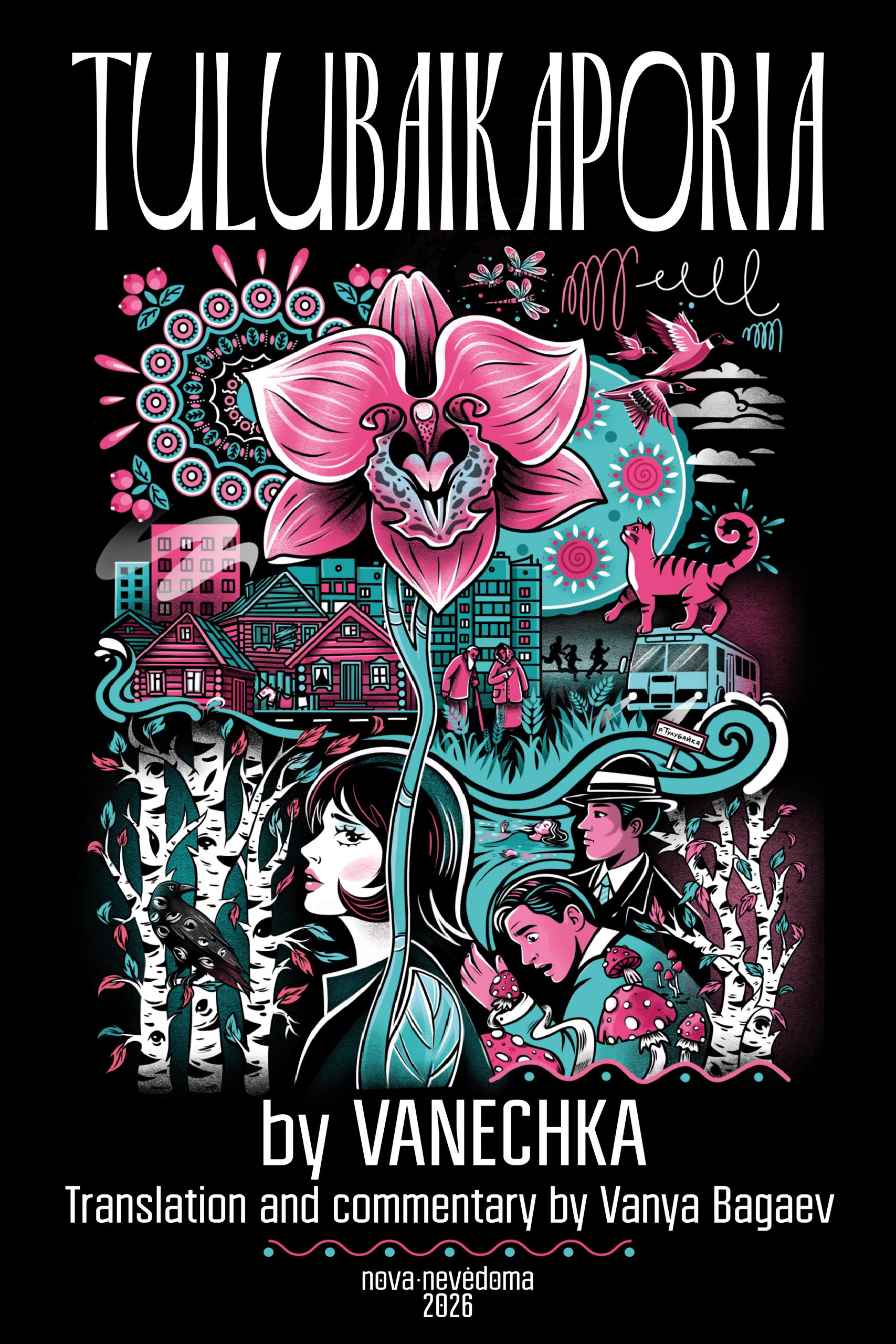
In Episode 5 our heroine writes a letter and references “Van’ka”1, one of the most famous Anton Chekhov’s stories. He wrote it in 1886, when he was twenty-six, and it ran on Christmas Day (old style) that year in the Petersburg Gazette in the Christmas stories section, signed A. Chekhonte, which was his comic pseudonym at that time. The story then was reprinted many times during Chekhov’s life.
What made it special is Chekhov’s subversion of the genre of Yuletide tales that all were at the time hopeful, uplifting, miraculous, but Chekhov’s ending is more ambiguous, and the miracle, if it happens at all, seems to belong in the dream world, same as hope — where, perhaps, all hopes belong.
The address Van’ka writes on the envelope became proverbial in Russian, still seemingly in use today as the standard idiom for something doomed by an impossible address.
Lev Tolstoy, as his contemporaries mentioned, specifically loved Chekhov’s child figures, including Van’ka.
Van’ka Zhukov, a boy of nine who had been sent three months earlier as apprentice to Alyakhin the cobbler, did not go to bed on Christmas Eve. Having waited until the masters and the journeymen had gone off to matins, he took from his master’s cupboard a small bottle of ink, a penholder with a rusty nib, and, spreading out a crumpled sheet of paper in front of him, began to write. Before tracing out the first letter, he glanced fearfully at the doors and windows several times, threw a sidelong look at the dark icon, on either side of which stretched shelves of cobbler’s lasts, and let out a broken sigh. The paper lay on a bench, and he himself knelt before the bench.
“Dear Grandad, Konstantin Makarovich!” he wrote. “And I am writing thee a letter. I wish thee a merry Christmas, and may the Lord grant thee everything. I have got no father nor mum, only thee alone left to me.”
Van’ka turned his eyes to the dark window, in which the reflection of his candle flickered, and vividly imagined his grandad Konstantin Makarovich, who served as night-watchman for the Zhivarev household. He is a small, scrawny but uncommonly nimble and lively little old man of about sixty-five, with a perpetually laughing face and drunken eyes. By day he sleeps in the servants’ kitchen or chaffs the cook-maids; by night, wrapped in a roomy sheepskin coat, he walks round the estate beating his rattle. Behind him, heads lowered, walk old Kashtanka and the male dog Vyun2, so named for his black colour and his body, long as a weasel’s. This Vyun is uncommonly respectful and affectionate, gazing with the same touching tenderness on his own people and on strangers; but no one is fooled. Beneath his respectfulness and meekness lies the most Jesuitical malice. No one is better than he at sneaking up at just the right moment and snapping at a leg, getting into the ice-cellar, or stealing a peasant’s chicken. More than once his hind legs were beaten lame, a couple of times he was hanged, every week he was flogged half to death, but he always revived.
Just now, no doubt, Grandad is standing at the gate, screwing up his eyes at the bright-red windows of the village church and, stamping his valenki3, chaffs the house-folk. His rattle is tied to his belt. He throws up his hands, hunches with the cold, and, with an old man’s titter, pinches first the housemaid, then the cook-maid.
— A bit of snuff for us, eh? — he says, holding out his snuff-box to the wenches.
The wenches take a pinch and sneeze. Grandad goes into indescribable raptures, bursts into merry laughter, and shouts:
— Pry it loose, it’s frozen on!
They give a sniff of snuff to the dogs too. Kashtanka sneezes, twists her muzzle and, offended, walks off to one side. Vyun, out of respect, does not sneeze, and wags his tail. And the weather is magnificent. The air is still, clear, and fresh. The night is dark, but you can see the whole village with its white roofs and the trails of smoke rising from the chimneys, the trees silvered with frost, the snowdrifts. The whole sky is strewn with merrily twinkling stars, and the Milky Way stands out as clear as if it had been washed and rubbed down with snow before the holiday…
Van’ka sighed, dipped his pen, and went on writing:
“And yesterday I copped a dragging. Master dragged me out into the yard by the hair and gave me a leathering with his strap all because I were rocking their little un in the cradle and went and accident-like fell asleep. And this week missus told me to clean a herring, and I started from the tail, and she ups and takes the herring and starts poking me in the gob with her snout. The journeymen jeer at me, send me down the kabak4 for vodka and tell me to pinch the masters’ pickles, and the master clouts me with owt that comes to hand. And there’s no food to speak of. In the morning they give me bread, at dinner porridge, and in the evening bread again, but as for tea or shchi5, the masters scoff it down themselves. And they make me sleep in the sieni6, and when their little un cries I don’t sleep at all, just rock the cradle. Dear Grandad, do a godly mercy, take me away from here, home, to the village, there ain’t no possibility for me no more… I bow at thy feet and will for ever pray to God for thee, take me from here, else I’ll die…”
Van’ka twisted his mouth, rubbed his eyes with his black fist, and sobbed.
“I’ll grind tobacco for thee,” he went on, “I’ll pray to God for thee, and if I do owt wrong, leather the living daylights out of me. And if tha thinks there’s no position for me, then for Christ’s sake I’ll ask the foreman to let me clean boots for him, or I’ll go as a shepherd boy in place of Fyedka. Dearest Grandad, there ain’t no possibility for me, just plain death. I’d a mind to run to the village on foot, only I’ve no boots, and I’m feared of the frost. And when I’m grown up big, then for this same I’ll feed thee and let none do thee any harm, and when tha dies I’ll pray for the repose of thy soul, just the same as I do for me mum Pelageya.
And Moscow’s a big city. The houses are all gentry’s and there’s lots of horses, but no sheep, and the dogs aren’t fierce. The boys here don’t go round with the star7 and they don’t let nobody up on the kliros8 to sing, and one time I seen in a shop window there were fishhooks for sale right with the line attached and for every sort of fish, mighty good uns, even one hook there as would hold a pud-weight9 catfish. And I seen them shops as has guns of every kind, proper squire-like fashion, so I reckon they’d be a hundred roubles each… And in the butchers’ shops there’s black-grouse and hazel-hens and hares, and what place they shoot them in, the shopmen don’t let on.
Dear Grandad, and when the gentry has its tree with the presents, take a gilded nut for me and hide it in the green chest. Ask the young miss Olga Ignatyevna, tell her, it’s for Van’ka.”
Van’ka heaved a convulsive sigh and stared again at the window. He remembered that Grandad always used to go into the forest for the masters’ Christmas tree, and would take his grandson with him. What a merry time it was! Grandad would grunt, and the frost would grunt, and, looking at them, Van’ka grunted too. Before cutting down the tree, Grandad would smoke a pipe, take a long sniff of snuff, chuckle at shivering little Vanechka… The young firs, wrapped in frost, stand motionless and wait, which of them is to die? Out of nowhere a hare comes flying like an arrow across the snowdrifts… Grandad can’t help shouting out:
— Get ‘im, get ‘im… get ‘im! Ah, you bob-tailed devil!
Grandad would haul the cut fir to the masters’ house, and there they would set about decorating it… Busiest of all was the young miss Olga Ignatyevna, Van’ka’s favourite. When Van’ka’s mother Pelageya was still alive and in service with the masters as a housemaid, Olga Ignatyevna used to feed Van’ka boiled sweets and, for want of anything better to do, taught him to read, to write, to count to a hundred, and even to dance the quadrille. When Pelageya died, the orphaned Van’ka was packed off to the servants’ kitchen to Grandad, and from the kitchen to Moscow to Alyakhin the cobbler…
“Do come, dear Grandad,” Van’ka went on, “for Christ’s sake and God’s, I beg thee, fetch me away from here. Have pity on me, thy poor wretched orphan lad, else they all knock me about, and I’m fair starving, and I’m that miserable I can’t tell, I’m forever crying. And the other day master gave me a wallop on the head with a last, so I went down and could scarce come round. Me life’s done for, worse than any dog’s… And I send my respects too to Alyona, to one-eyed Yegorka and to the coachman, and don’t give me squeezebox to nobody. I remain thy grandson, Ivan Zhukov, dear Grandad do come.”
Van’ka folded the written sheet into four and put it into an envelope bought the day before for a kopeck… Having thought for a bit, he dipped his pen and wrote the address:
To Grandad, to the village.
Then he scratched his head, had a think, and added: “Konstantin Makarovich.” Pleased that no one had interrupted his writing, he put on his cap and, without throwing on his sheepskin jacket, ran out into the street in just his shirt…
The shopmen at the butcher’s, whom he had questioned the day before, had told him that letters were dropped into post-boxes and from the boxes were carried all over the world by postal troikas10 with drunken coachmen and ringing bells. Van’ka ran to the first post-box and pushed his precious letter into the slit…
Lulled by sweet hopes, an hour later he was fast asleep… He dreamed of the stove. On the stove sits Grandad, his bare feet dangling, reading the letter to the cook-maids… And round the stove walks Vyun, wagging his tail…
Soft N
Vyun is a small, sinuous freshwater fish. The word is also used as a name for any slippery, snakey creature
Valenok, and plural valenki, is felted wool footwear traditionally worn in Russian winters. Aggressively non-waterproof.
A traditional Russian tavern or drinking establishment for the common folk dating back to the 16th century.
Shchi is traditional Russian cabbage soup, often with meat.
Sieni is the unheated entrance passage of a Russian house, separating the heated living quarters from the outside.
Going round with the star was a Russian Orthodox Christmas custom in which children went from house to house carrying a large illuminated star on a pole, singing carols and receiving small gifts in return.
Kliros is the raised platform flanking the altar in an Orthodox church, where the choir and readers stand during the service.
Pud is an old Russian unit of weight, about 16.4 kg or 36 lb. Big fish, that.
Troika is a traditional Russian three-horse carriage team harnessed side-by-side, with the middle horse trotting while outer horses gallop.
Thank you, Vanechka, a pleasure to read; it reads like Chekhov. Wild. The rhythm … is so Chekhov I’d like to hear it in an audio version by Andrew Scott (after his “Vanya” I assume he can inhabit Chekhov fairly well).
Your translation flows so naturally I thought I was reading this story in Russian. Chekhov depicted children as lovingly and accurately as Dickens and Andersen could. What a gem!