

Headless goddess in a metaphysical city
complementary materials to the sensory world behind Lingus Venus (Tulubaikaporia ep.02*)


The post is, again, too long for email, so we suggest to read it on the web.
Of all stories in the book, Lingus Venus is the most distant to Tulubaika in many senses: geography, comprehension, writing, language. It was one of the first stories written for the book even before it became a book, and it is one of a very few stories originally written in English, as the result — not many footnotes. At the same time, it’s the closest to Tulubaika because precisely here, for the first time, we meet our heroine as a mysterious Sophiaesque figure. The reason is (if the reader can believe that) she’s possibly the book’s main heroine / protagonist! In this episode, however, her inner world is attempted to be seen through the narrator’s foreign eyes, so, if she = main heroine, then again, perhaps, in this story we’re farthest from Tulubaika. Much confusion! We’re just spiraling around! (Ah!)
Together with our heroine, a lot of concepts central to the book appear in this episode for the first time, all of which will be developed later. What follows is sensory satellites that shed light and orbit the episode…
Music & Sound
The playlist might not be music that directly appears in the episode, yet nevertheless it reflect the core mood of the text, or at least the author while he was listening to them while thinking / writing:
Binker and Moses — Accelerometer Overdose (a nod to the lament of a dying elephant) · YouTube · Spotify · Bandcamp
Kiltro — The Drunk · YouTube · Spotify
La Femme — Où va le monde · YouTube · Spotify
Rap&Vogue — Hotel Europe · YouTube · Spotify
Then, of course, playing throughout the episode in the background, we have the cicadian orchestra, in fact the loudest of any insect and comparable to a chainsaw, yet, while the latter is typically a sound of death, cicada’s chorus is a divine song of immortality, at least it was for the Greeks, who told the stories of muses transforming music-enchanted oblivious men into cicadas.
In a fraction of a millisecond… the cicadian orchestra starts its fierce symphony. Out of nowhere, a series of omnipiercing vibrating shrieks, like those of a spinning chainsaw or aroused starlings, takes over the space. BzzzzzZzzzZ BzzzZZZZzzz BzhzzzzZZzzZZZzzzZzZZZzzzZzzZzzzzzzzz and so on…
The City
Before us — an arcade, a long illuminated corridor with beige brick walls and a few dozen glass doors under an arching glass roof. The shops and restaurants are closed and dimly lit, the lights of melon-sized bulbs hanging sadly above empty counters.
We’re traversing a piazza, a concave square made of thousands of thousand-year-old convex stones polished by time and soles. In the middle of the piazza is a fountain with a statue of Venus.
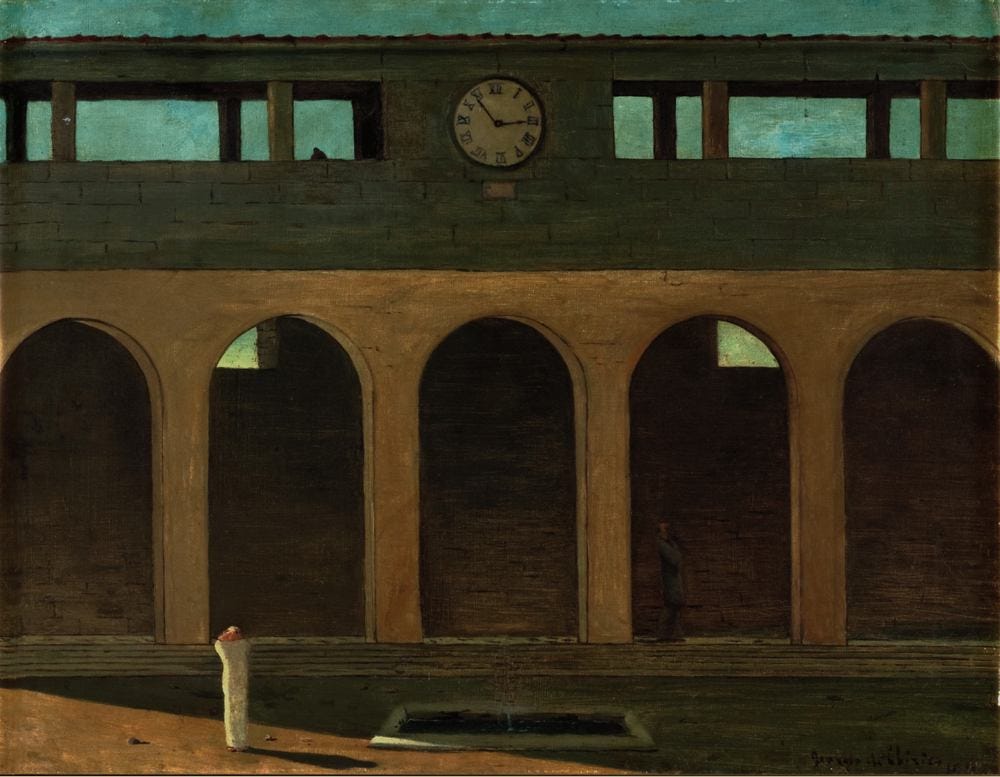
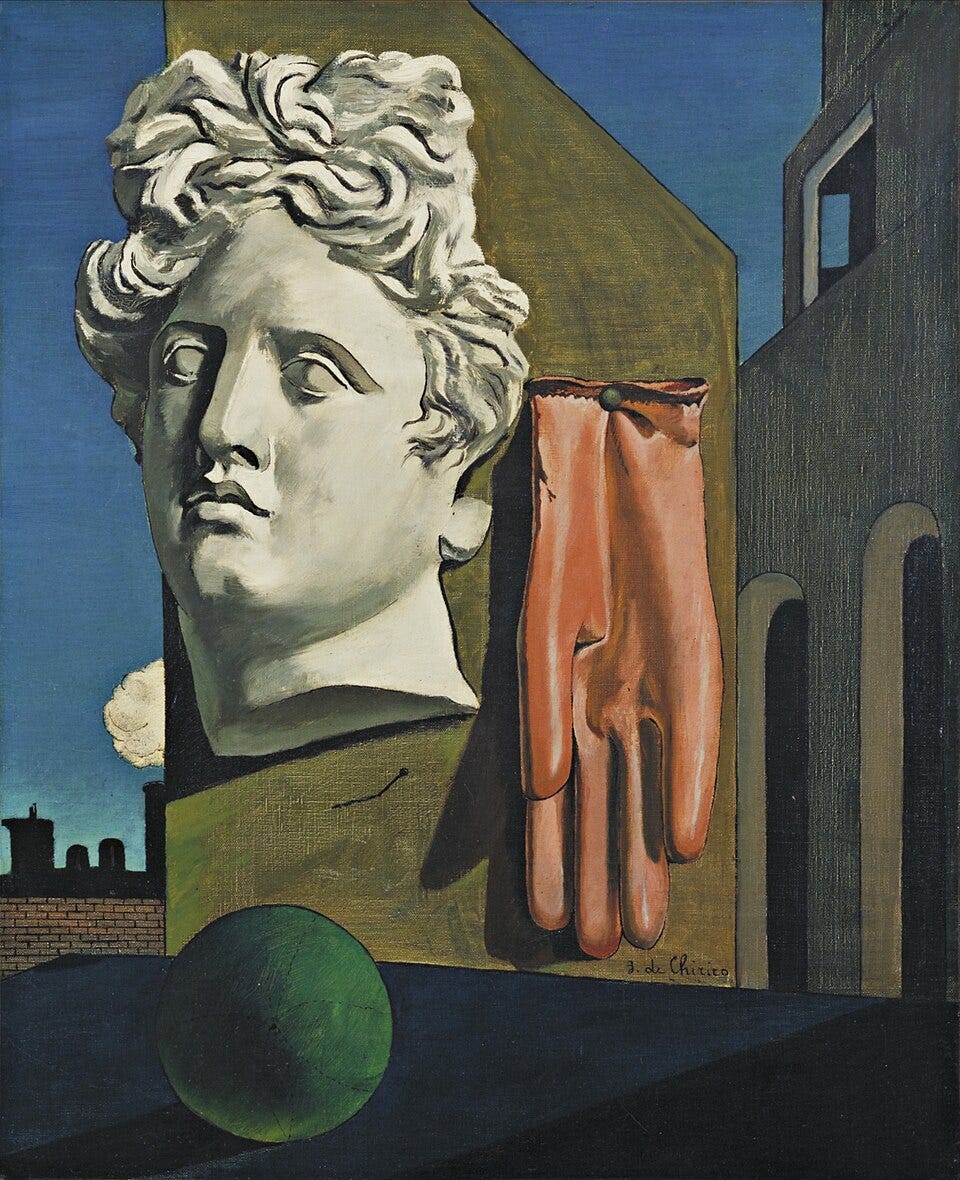
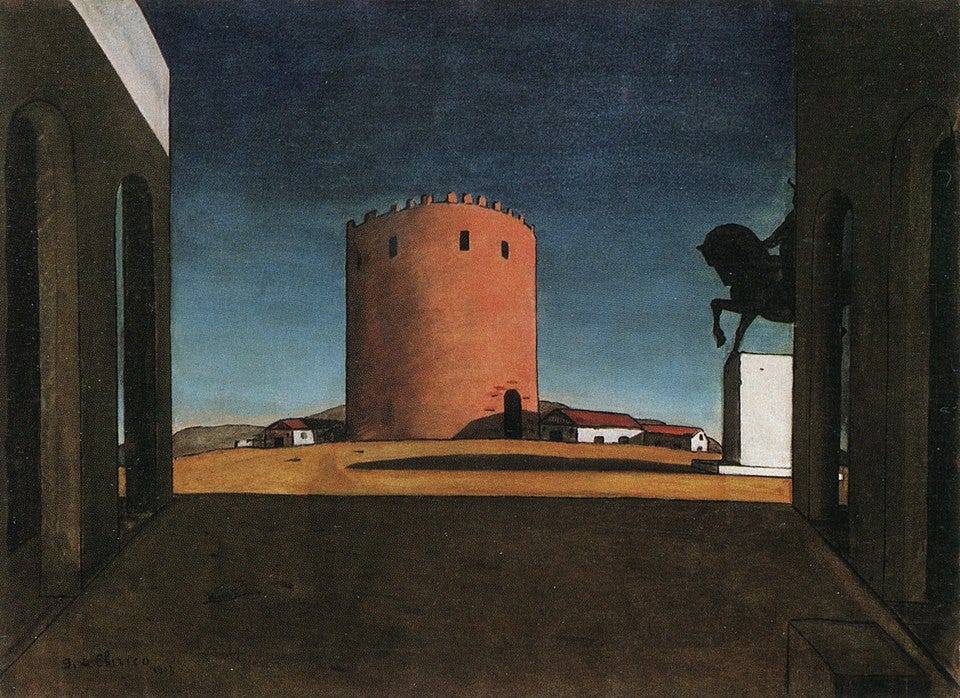
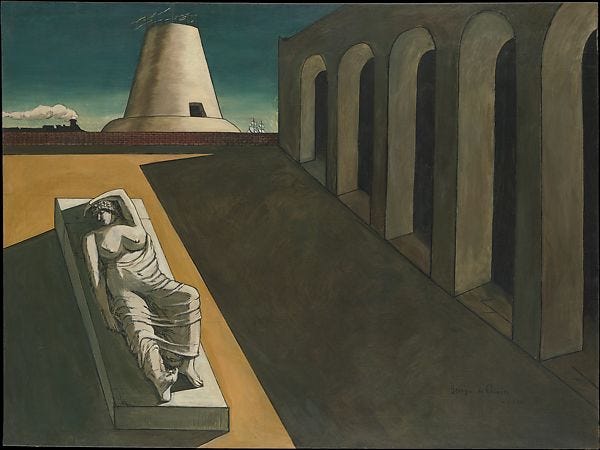
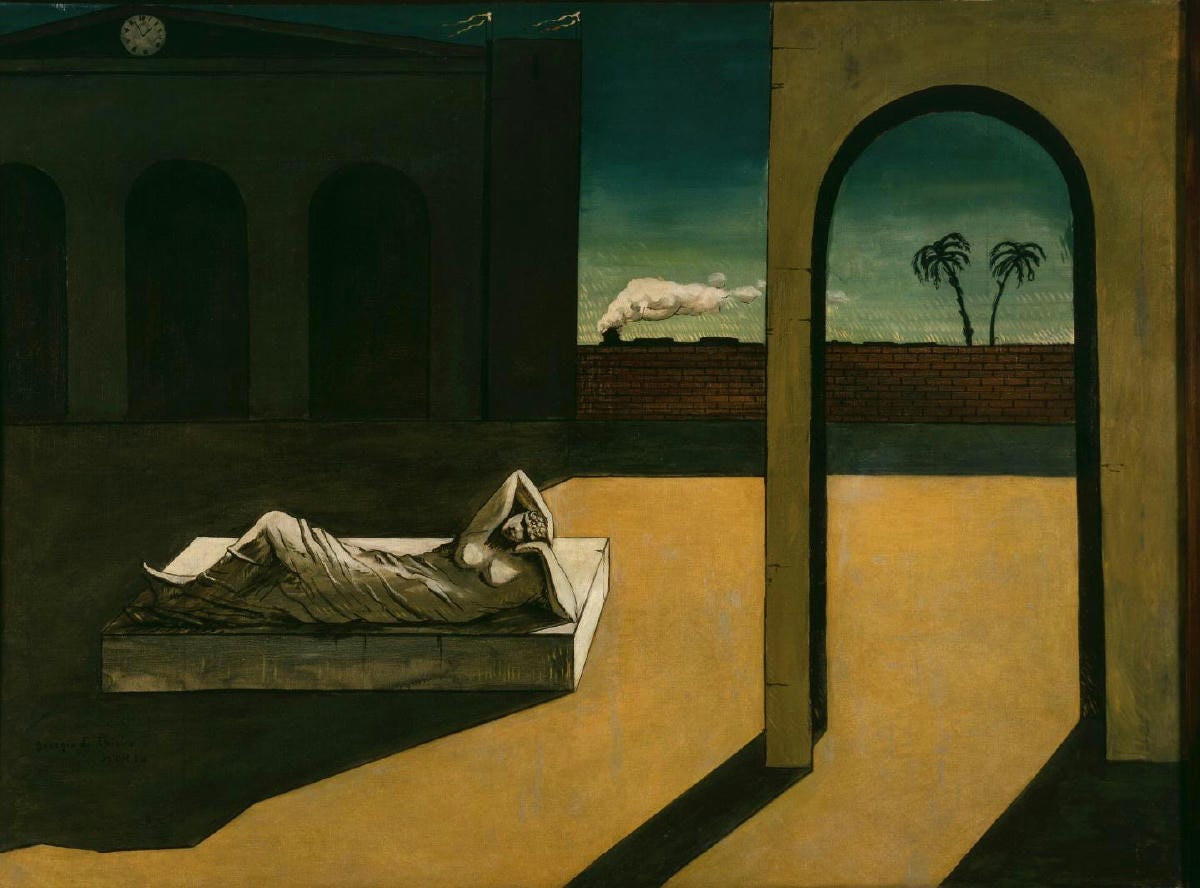
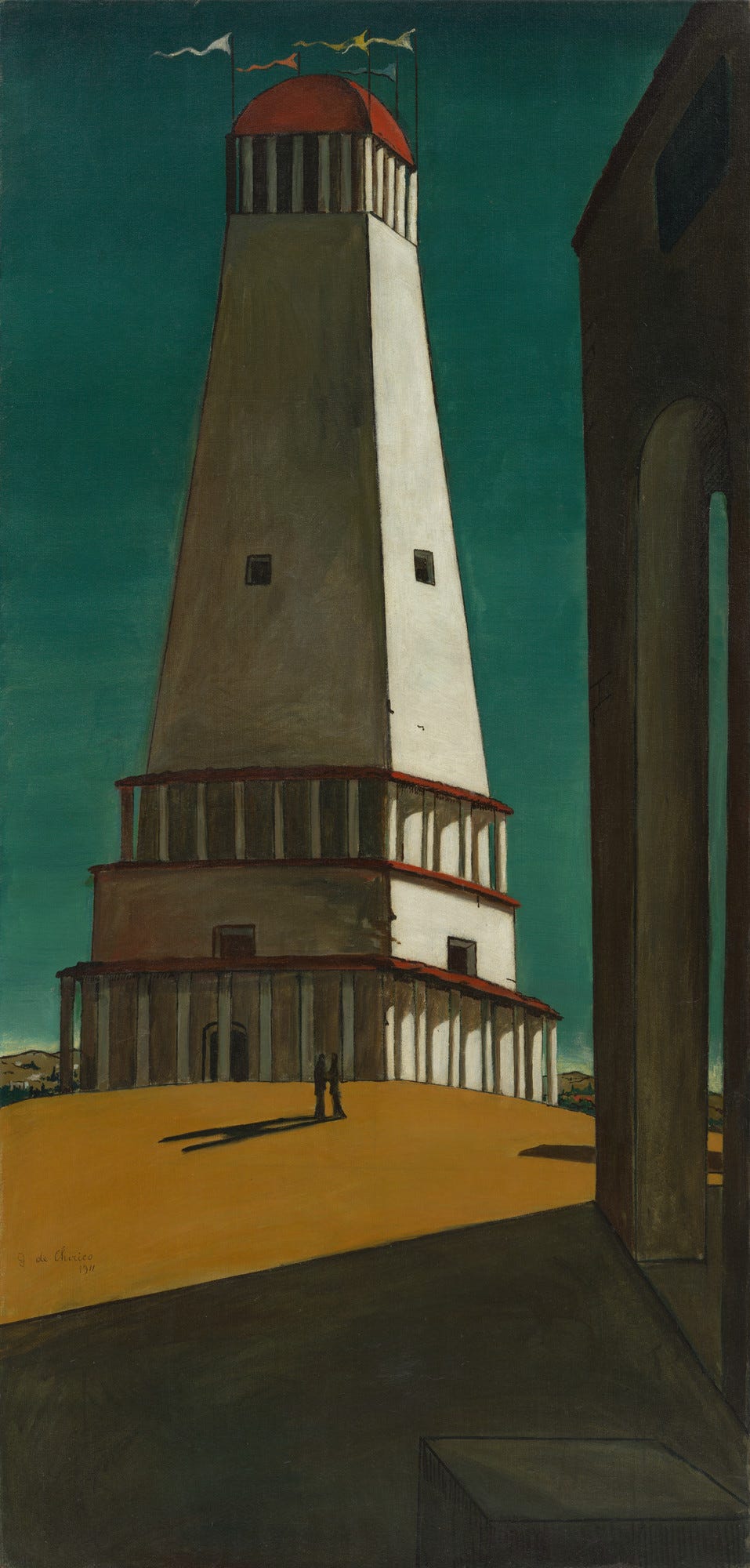
The unnamed and rather dislocated / liminal city of Episode Two, with its arcades, piazzas, canals, cobblestones, and seafood terraces under plexiglass, is located somewhere between Amsterdam and Rome, Venice and London, but it should look most like a Giorgio de Chirico painting, metaphysical cityscapes, which he painted in the 1910s and 1920s, depict exactly this kind of space: empty arcades casting long shadows, deserted piazzas with lone statues, a pervasive atmosphere of mystery suspended between dream and waking.
The very first painting in this style was The Enigma of an Autumn Afternoon(1910). The painting depicts a part of Florence’s Piazza Santa Croce with oversimplified details. The main things we see are the almost empty square, the plain facade of the Basilica of Santa Croce and the headless statue right to it. De Chirico painted it during his recovery from a serious illness which made him see the piazza differently, as ill as he was. So he painted the piazza with that in mind, not focusing on the Basilica or any other objects per se, but focusing on his perception and vision of it instead.
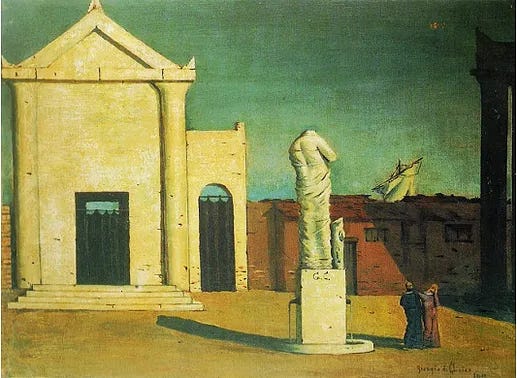
None of the paintings depict night, when the Episode Two happens, and yet they map onto the episode’s mood and setting almost perfectly:
Venus
Look. This is Venus, — she says, pointing at the bright slightly pulsating dot on the sky.
Good thing about her is that once every 584 days she floats as close to Earth as she can and you can see her even in the city. Today’s that day. Today she’s as bright as you can see her from the Earth.
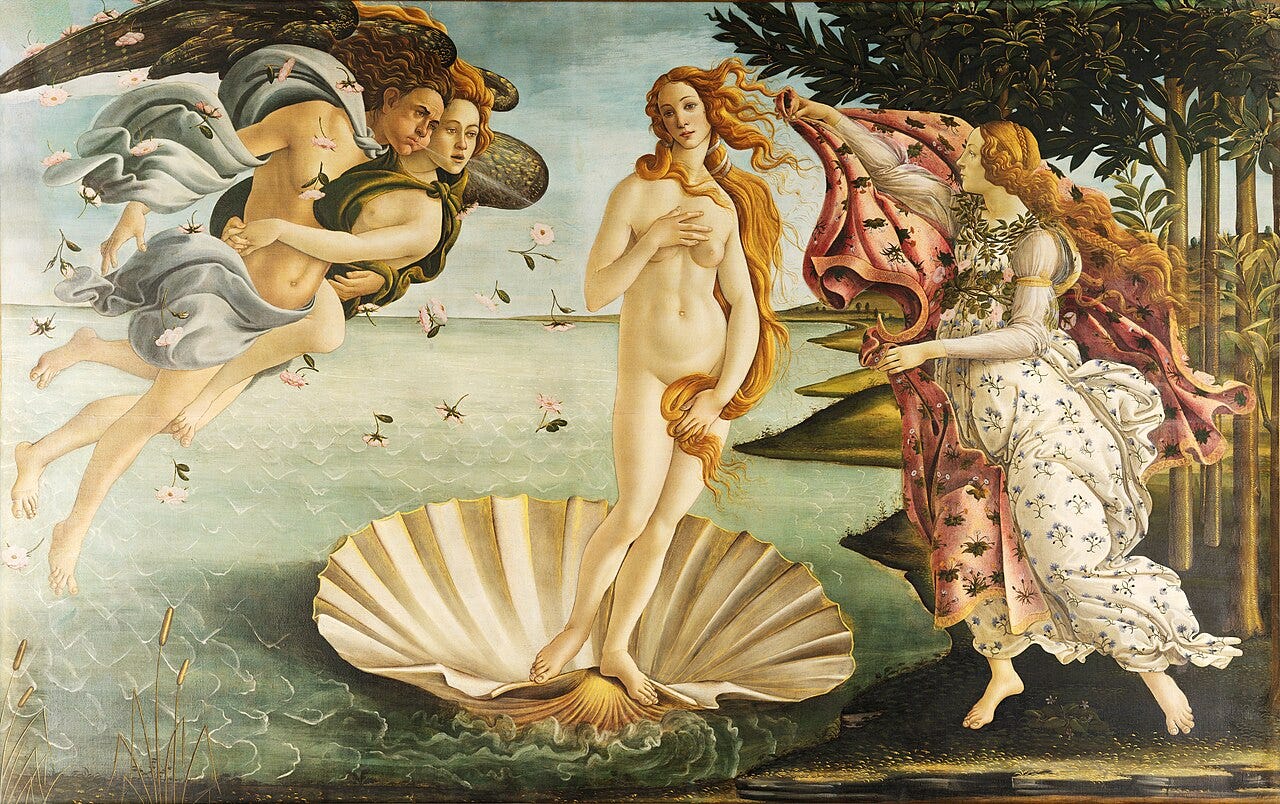
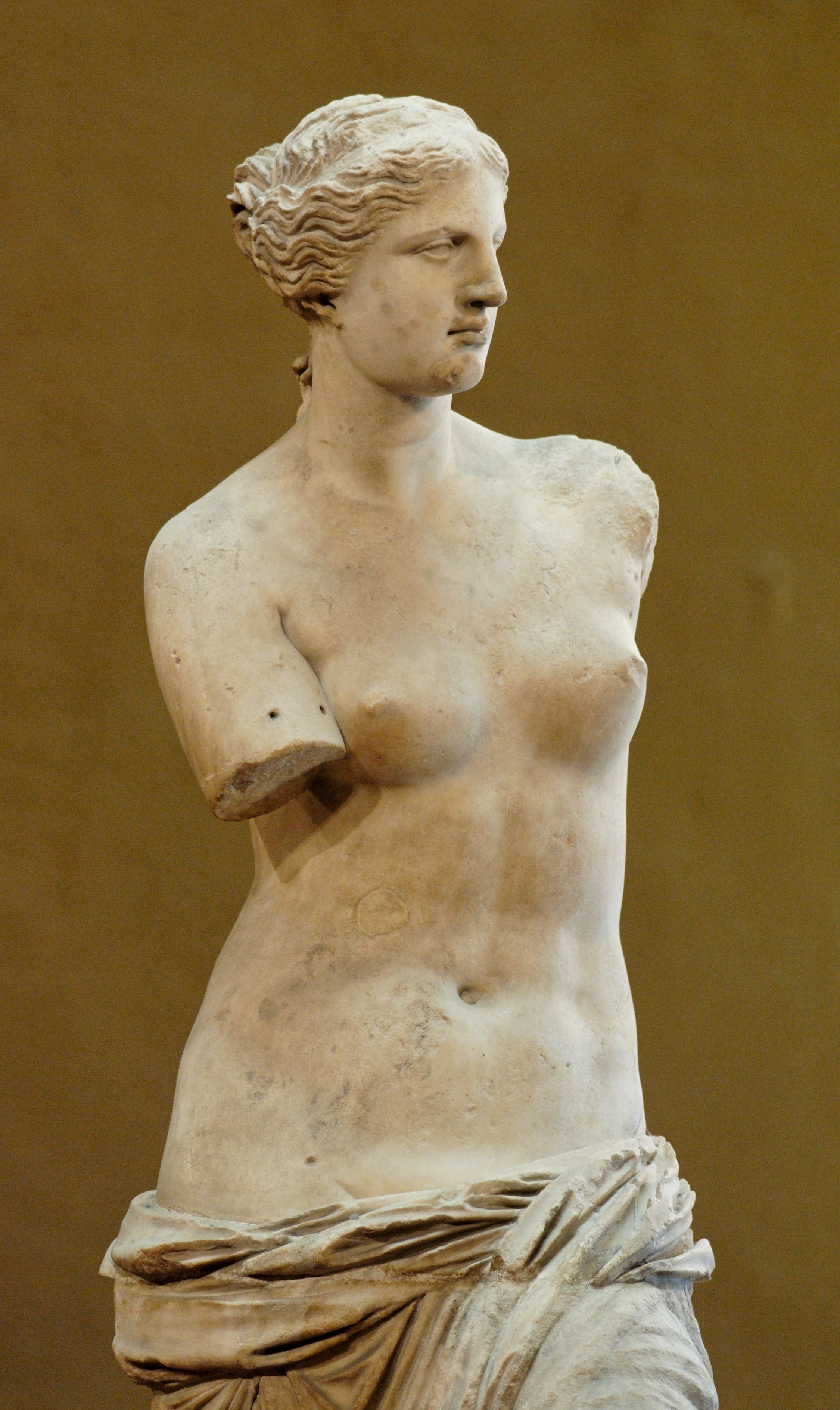
Venus is one of the episode’s thematic anchor’s, both the planet that bookends the night (visible at dusk as the evening star and dissolving at dawn), the headless goddess in the piazza fountain, and, well, the mythical queen ruling the episode.
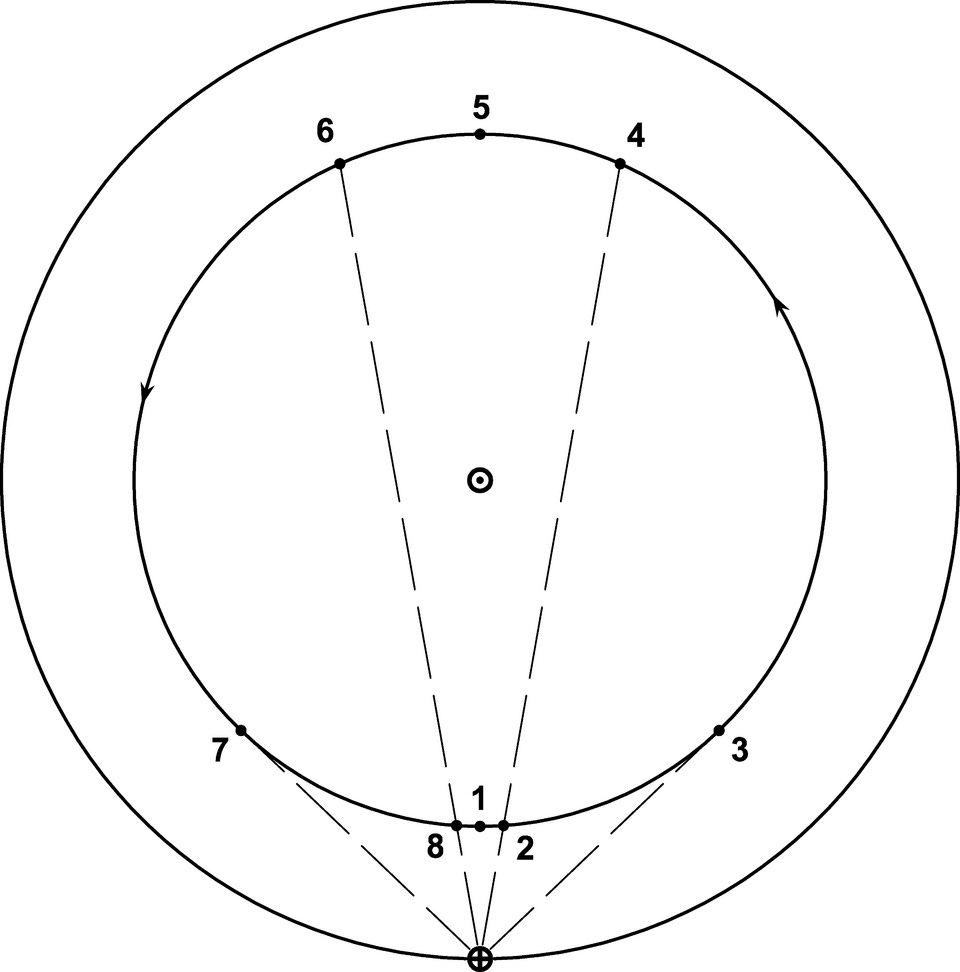
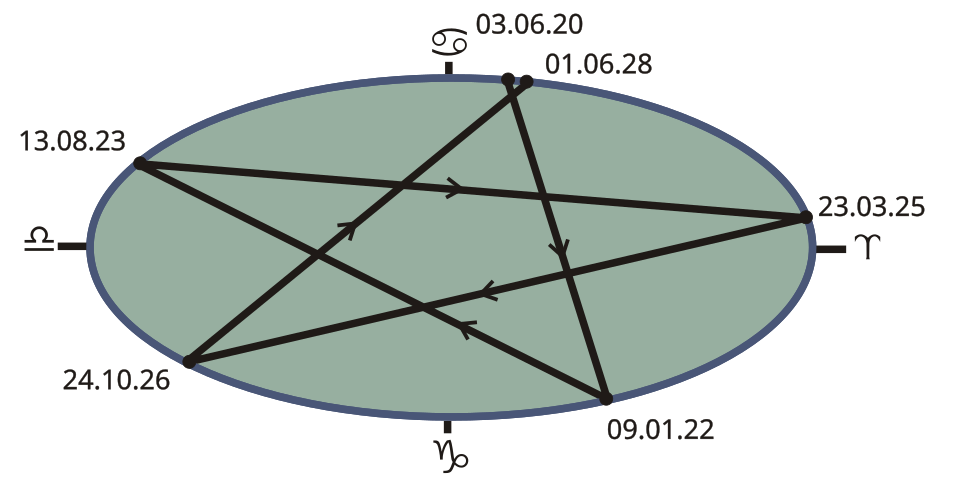
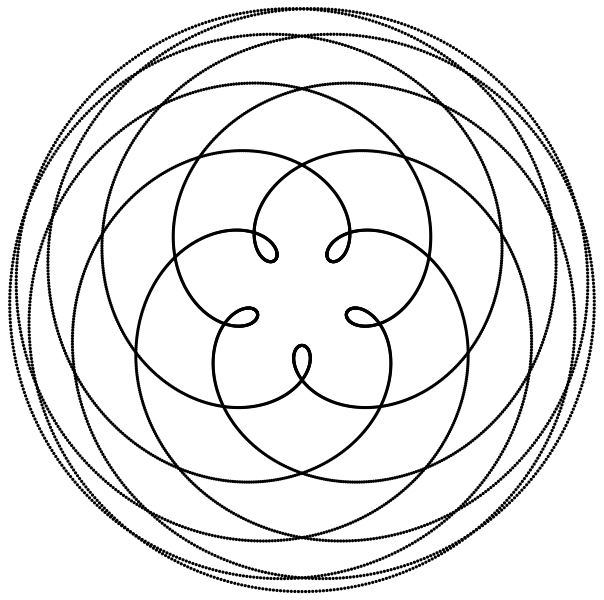
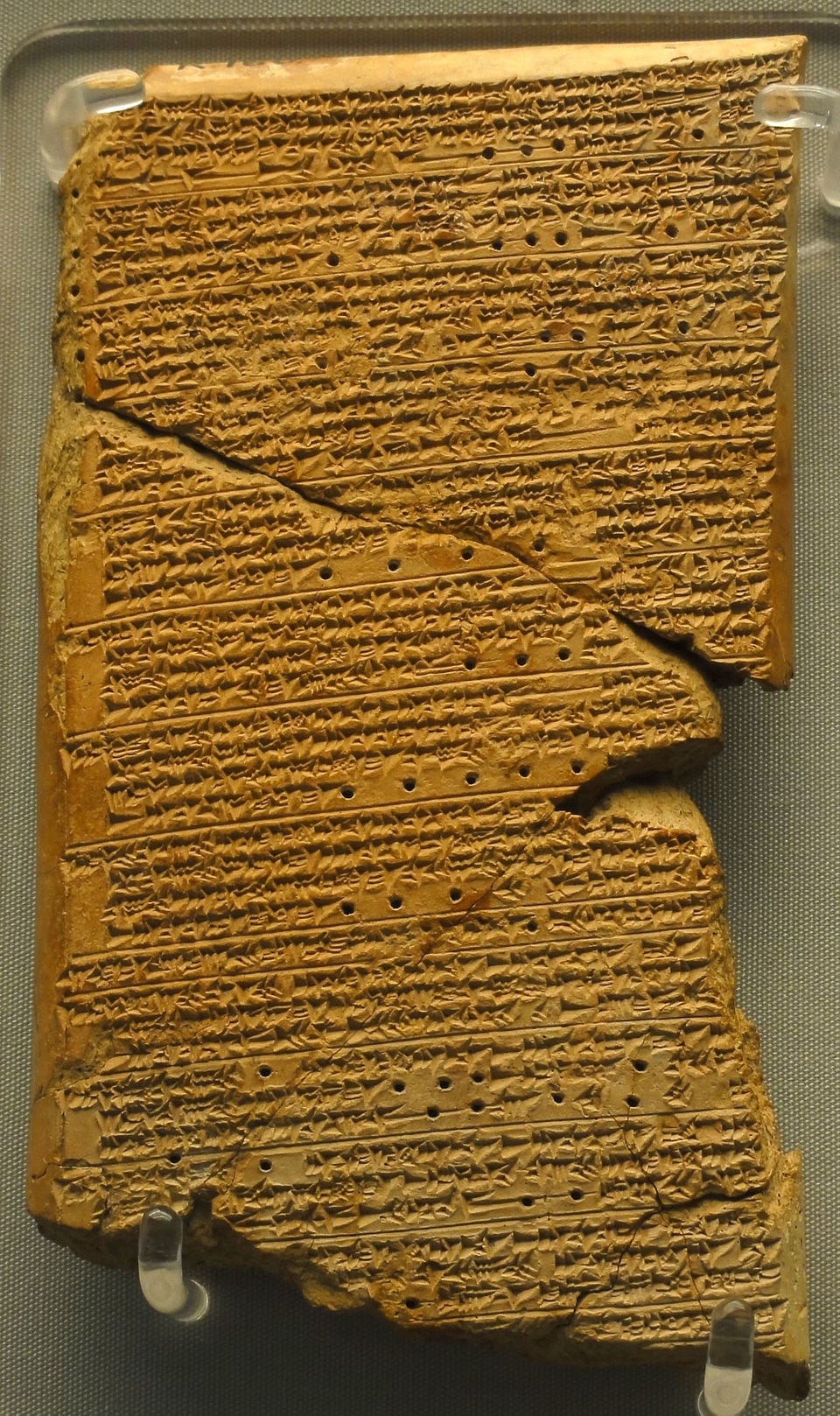
Over eight Earth years (2,922 days), Venus completes roughly 13 orbits around the Sun (13 x 224.7 days ≈ 2,921 days). During those eight years, Venus passes between Earth and the Sun five times. These five points of closest approach, plotted against the zodiac, trace a near-perfect pentagram, sometimes called the “Rose of Venus.” The pattern shifts by roughly 2° every eight years, completing a full rotation over about 1,200 years. When we plot Venus’s geocentric orbit (its position relative to Earth over those eight years) the five loops of closest approach produce a five-petalled flower, the trace of its dance around us. The ancient Babylonian Venus tablet of Ammisaduqa— a 7th-century BC cuneiform tablet in the British Museum, copied from observations dating to c. 1650 BC — records Venus’s risings and settings over 21 years, making it the oldest surviving planetary astronomical text. The pentagram was Inanna’s sign, the Sumerian goddess who was Venus, whom the Akkadians called Ishtar, and five-pointed cuneiform star represented her orbit.
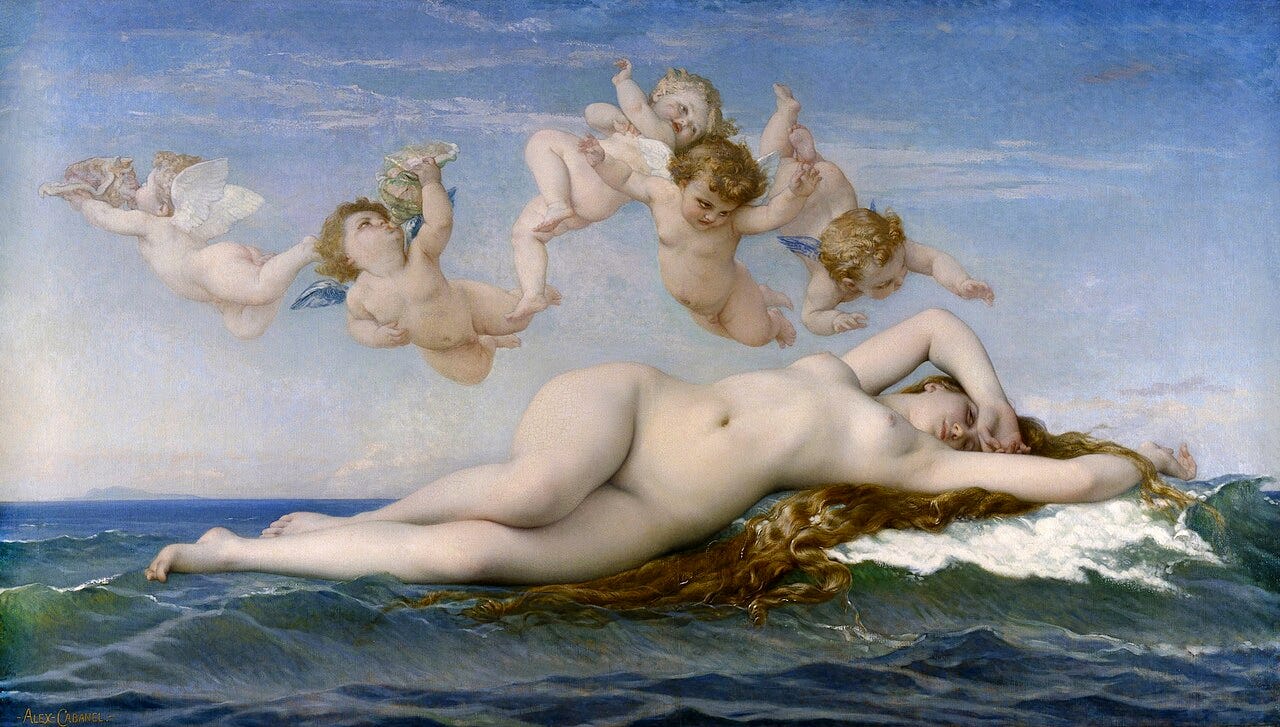
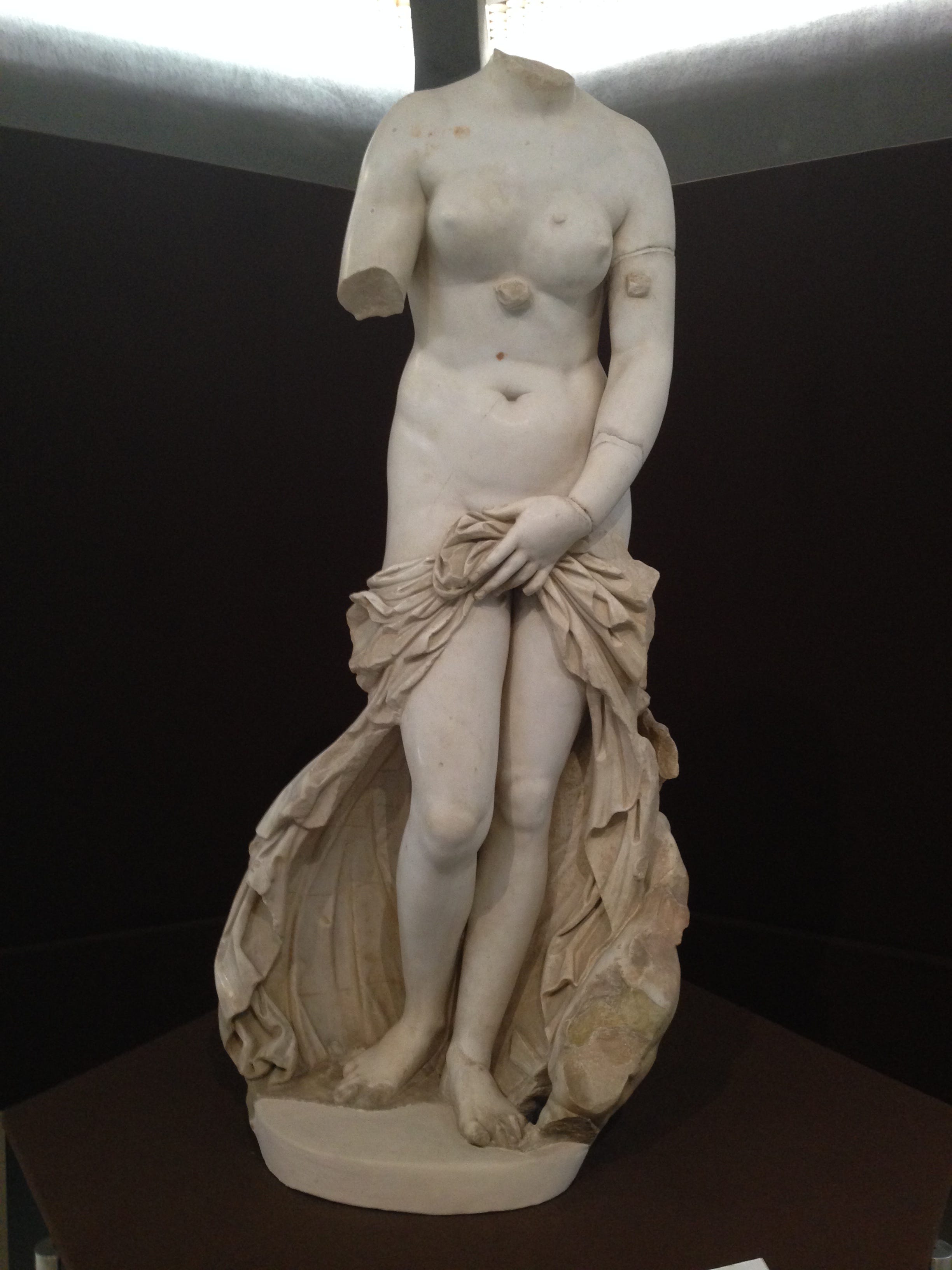
In the middle of the piazza is a fountain with a statue of Venus. The statue has no head, the head has no eyes and no mouth, the figure has no hands and the hands have no fingers, it has no legs, no torso, nothing, the statue doesn’t even have itself, but it’s still there, visible, looming a few metres high over the piazza, dropping its shadow in all directions, overlooking the paused fountain, now filled with coins from all around the world — tributes to the goddess of love.
Orchids
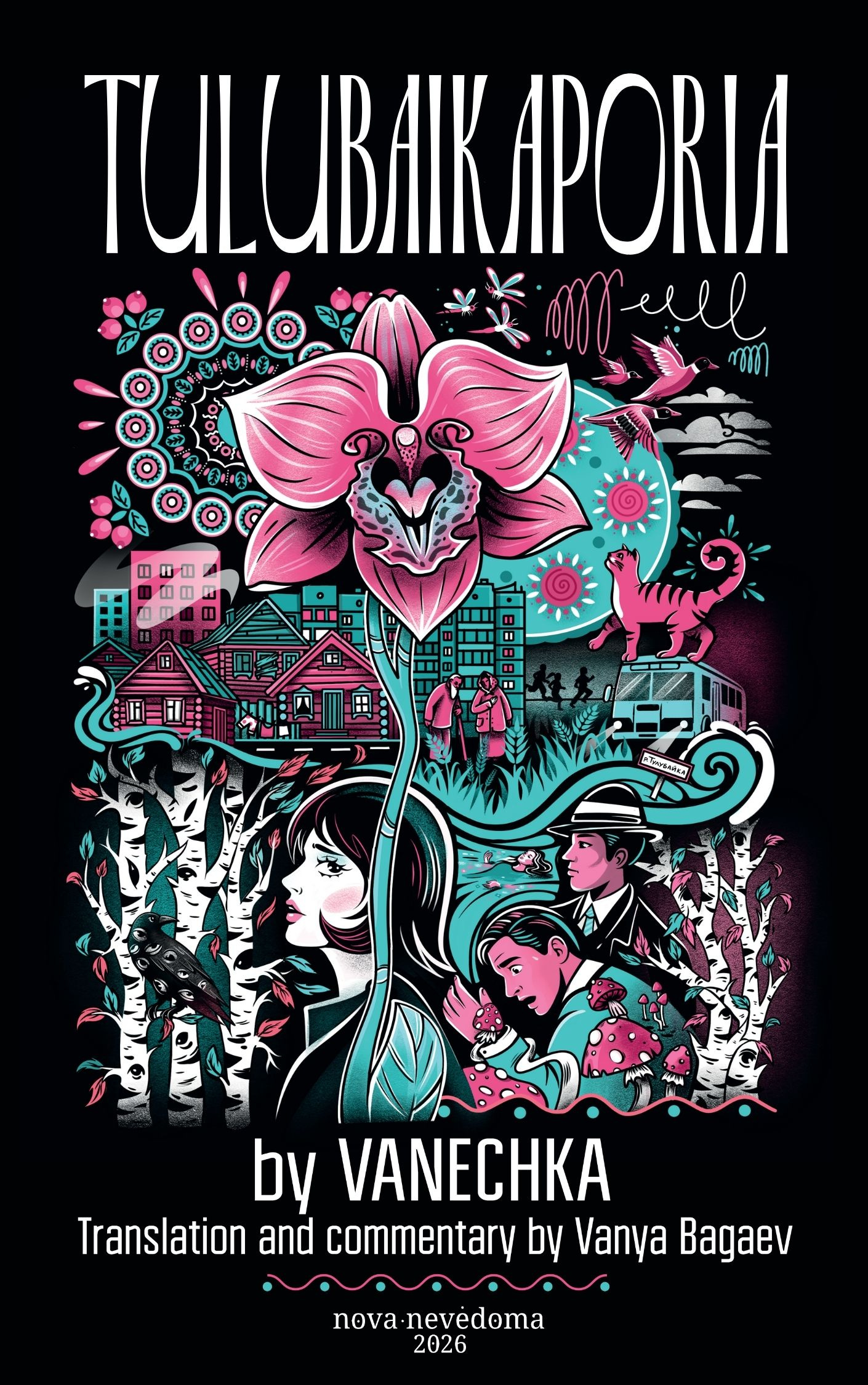
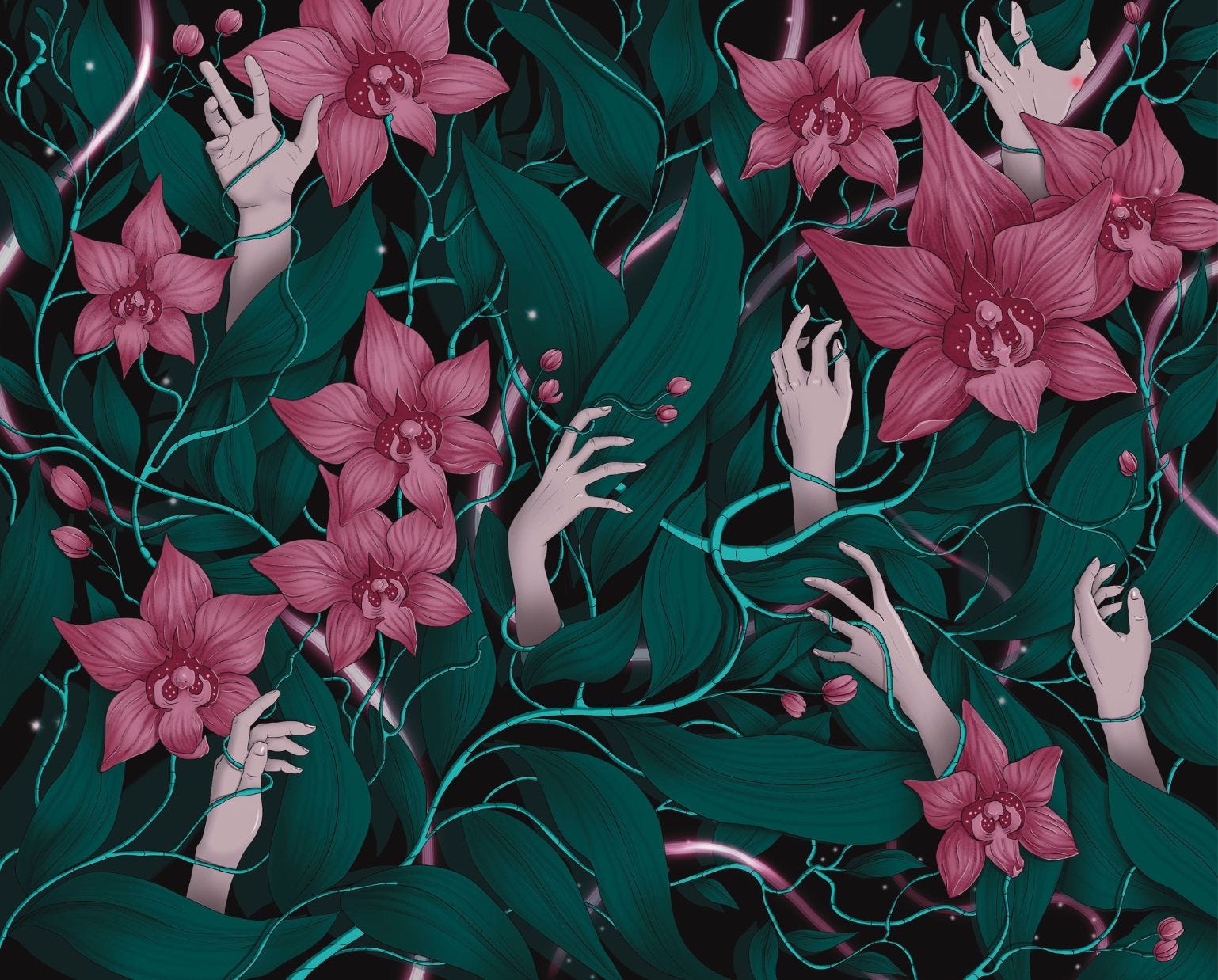
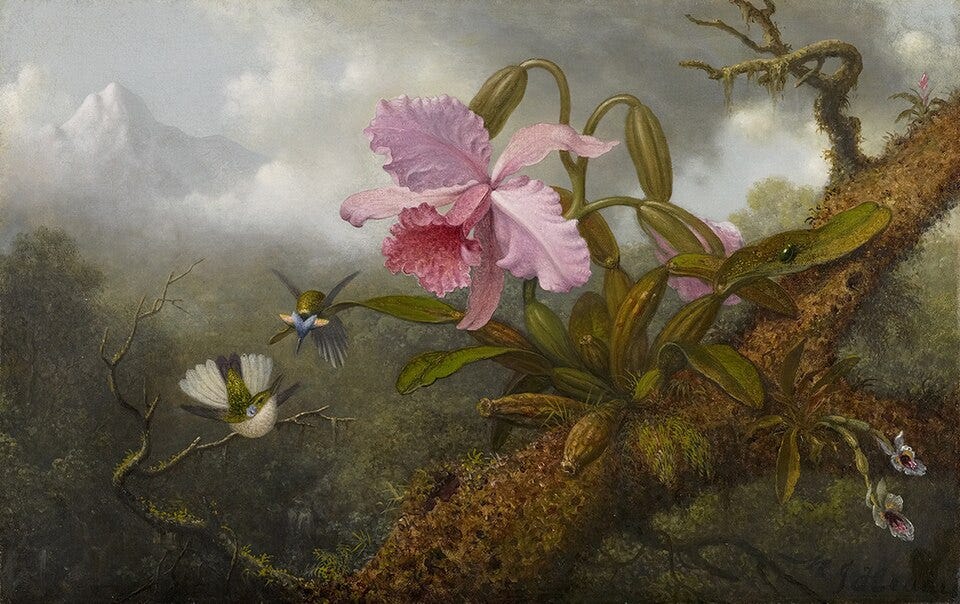
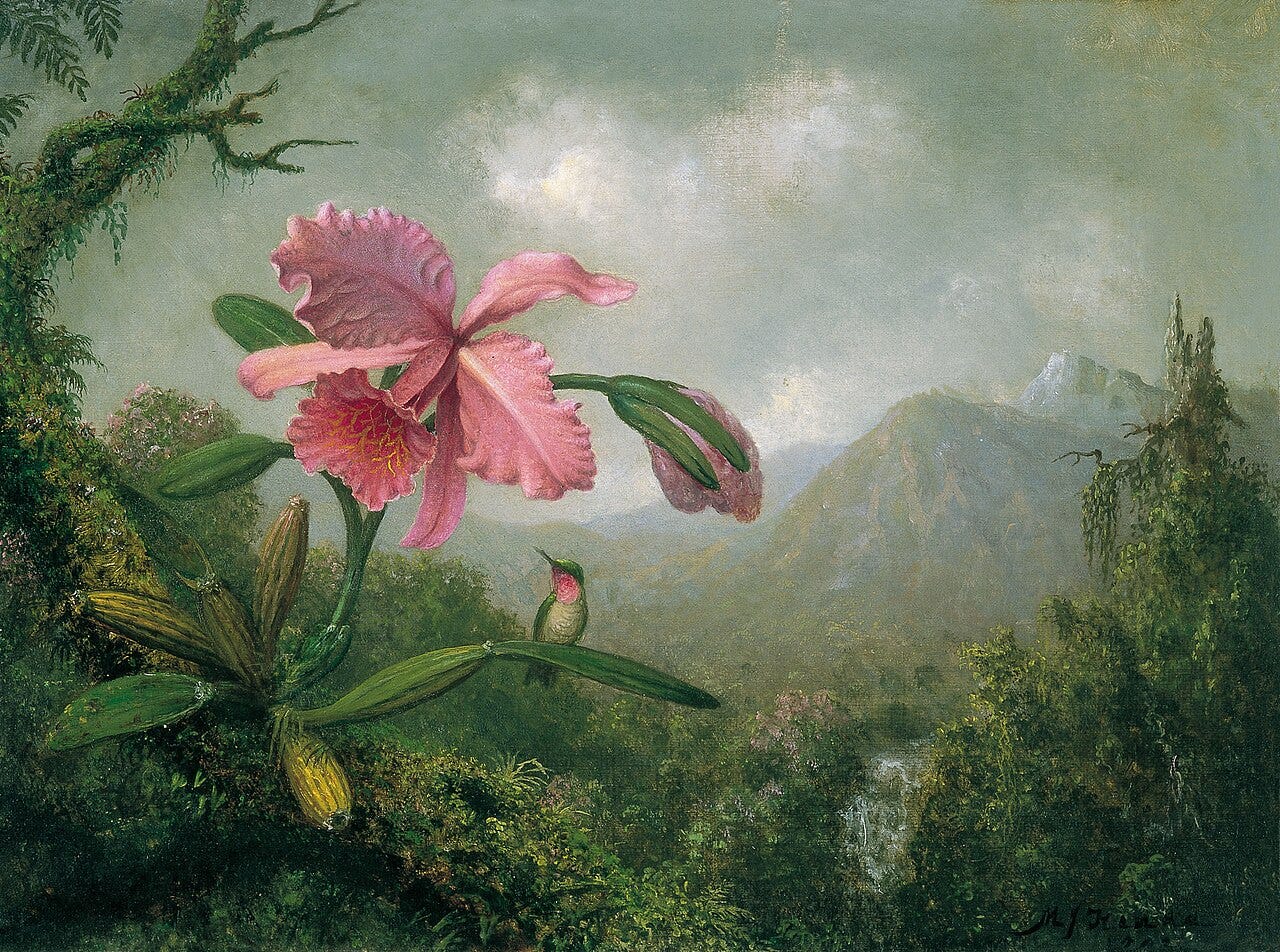
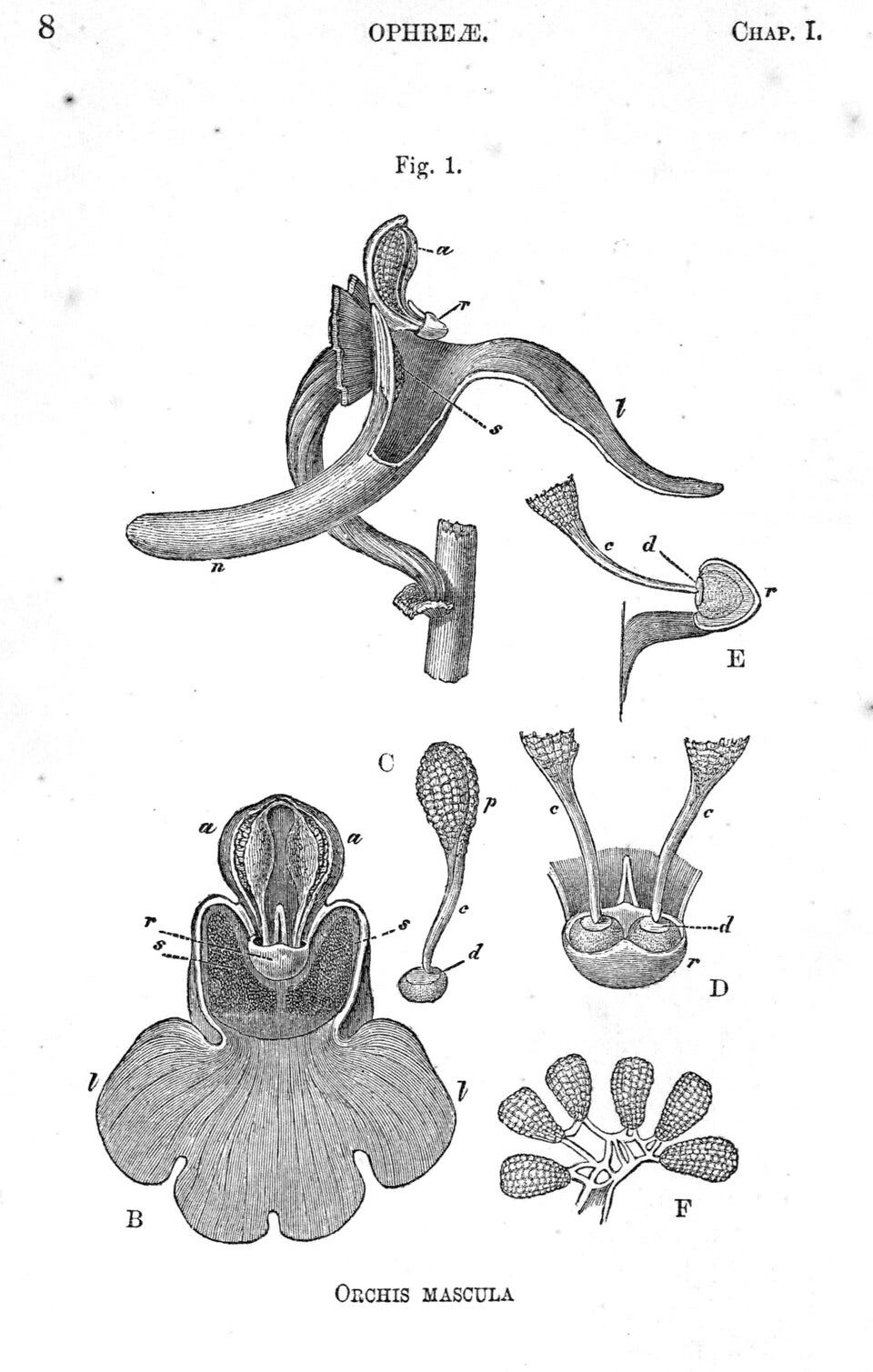
Suddenly, I find myself alone in an orchid garden, a garden that is the whole world, a grandiose, boundless construction built to feature but one orchid elucidated in the cosmic glow… At its centre emerges the labellum, sensuous and pink, its lobes frilled with intricate ruching and folds.
This (unambiguous) orchid vision, hallucination, or dream, or all three, is what inspired the book cover and many imagery in the book throughout. It dominates the whole composition looming over it, pink and resplendent, so whenever you hold the book in your hands and look at the cover, you know what’s staring back at you.
~ ~ ~
Various Imagery
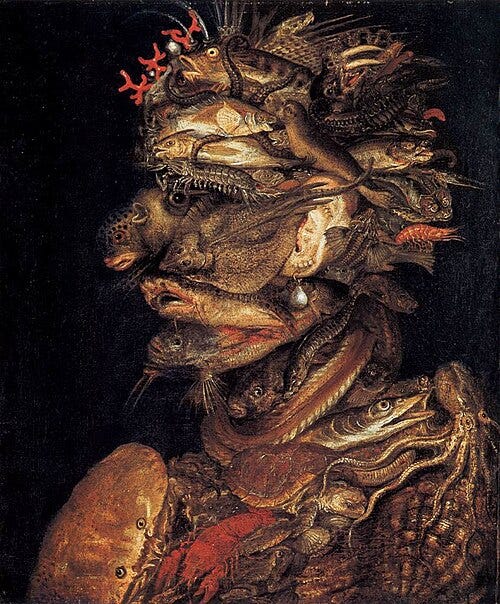
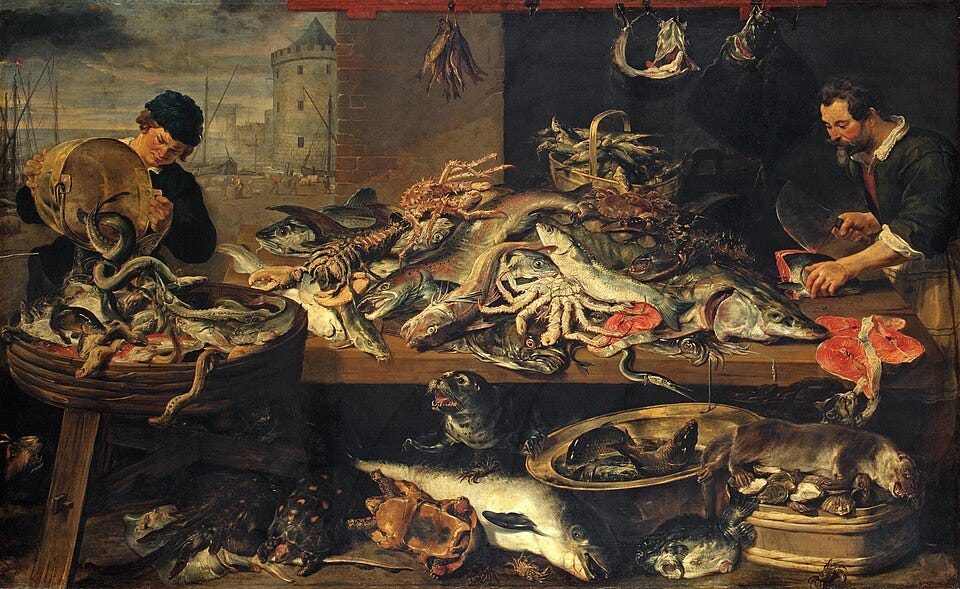
While the fish-headed waiters shout at each other in an unrecognisable tongue…
Arcimboldo built human portraits out of objects, e.g. his “Water” is a face made entirely of fish, crustaceans, and marine life: not exactly the waiter’s face but vibe-wise close enough!
On the porcelain plate right in front of me lies a slightly charred squirming tentacle of an ancient god, drizzled with saffron aioli.
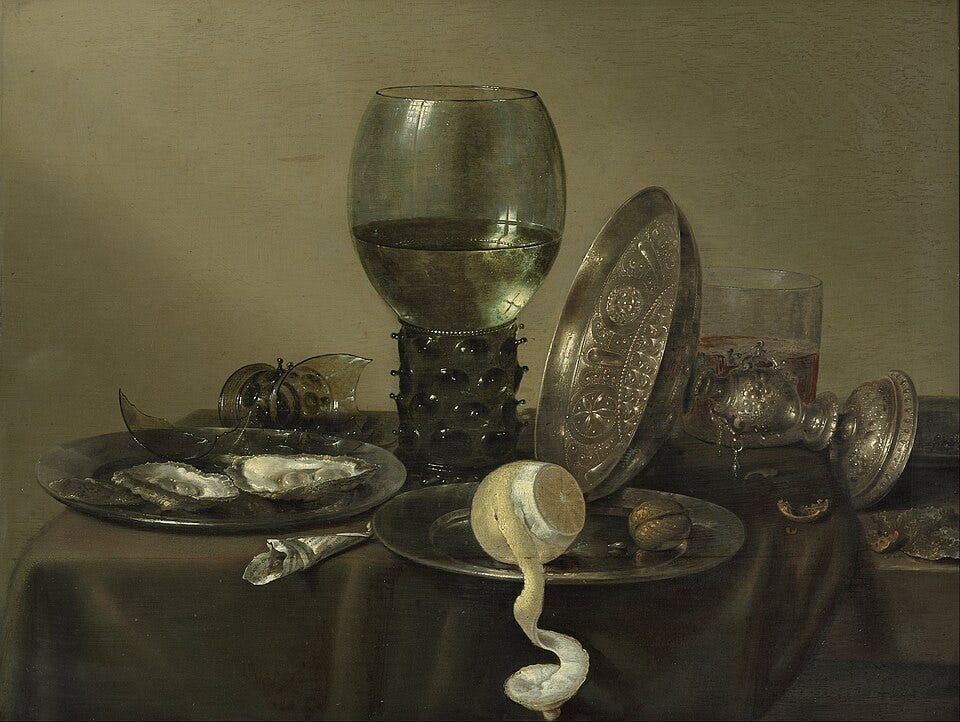
Twenty rock oysters rest on the mountain of ice right in the middle of our table.
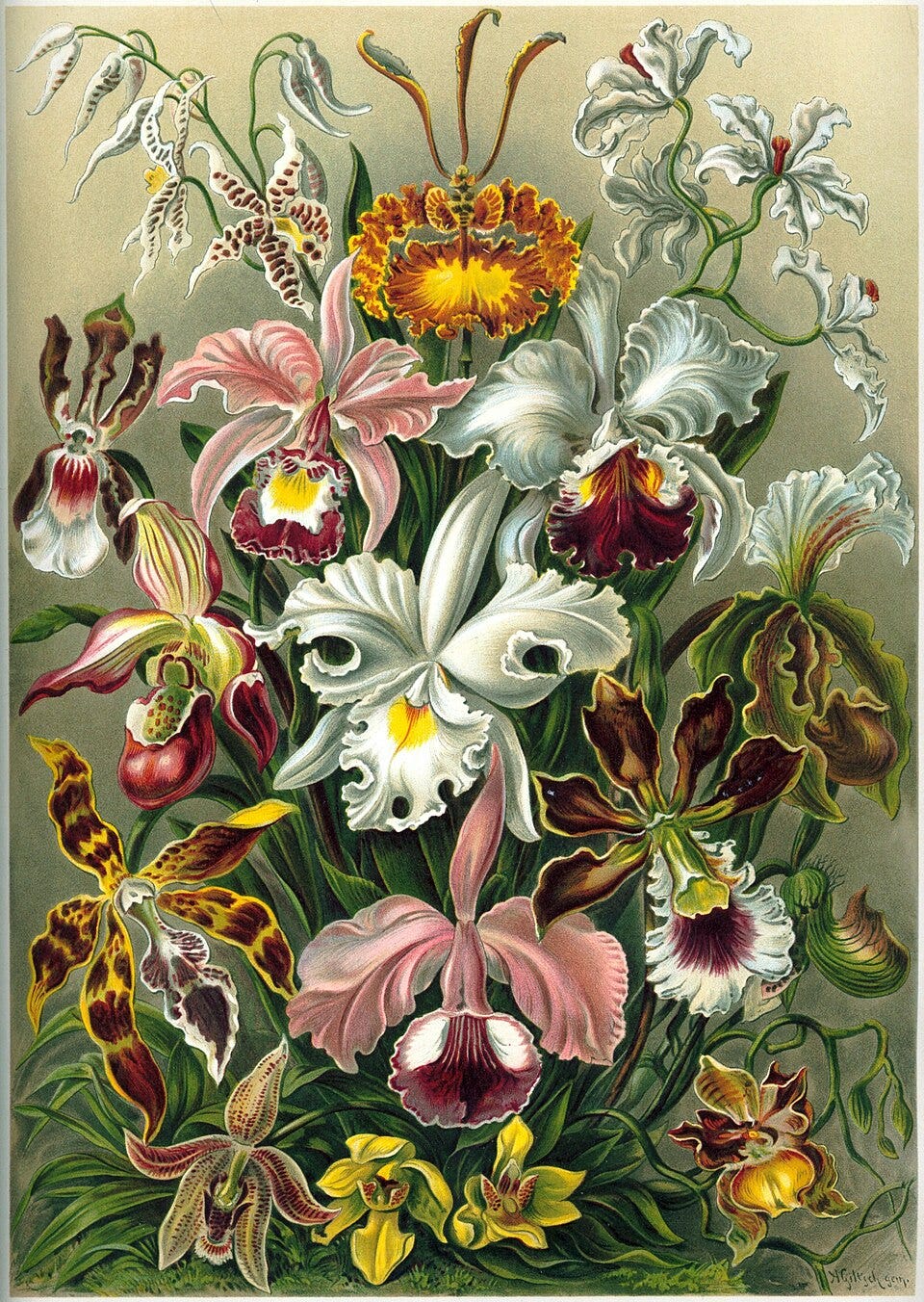
Around us, there’s a narrow and long public garden where, lanterned, grow various flora: camellias, roses, daffodils, lavender, hydrangeas, peonies, daisies, tulips, ferns, climbing ivy, jasmine, rhododendrons (lots of ‘em), wisteria, azaleas, chrysanthemums, lilacs, marigolds, irises, begonias, violets, cyclamens, heather, foxgloves, pansies, sage, more-of and more-poisonous yew, cypress, rosemary, juniper, fuchsia, dahlias, petunias, anemones, aster, zinnias, cosmos, verbena, and maybe some others I can’t recognise, for I’m not a botanical expert.
Lovely context. I had no idea what all the things in the story referred to but now I do